Avast! Thar Be Sea Monsters!
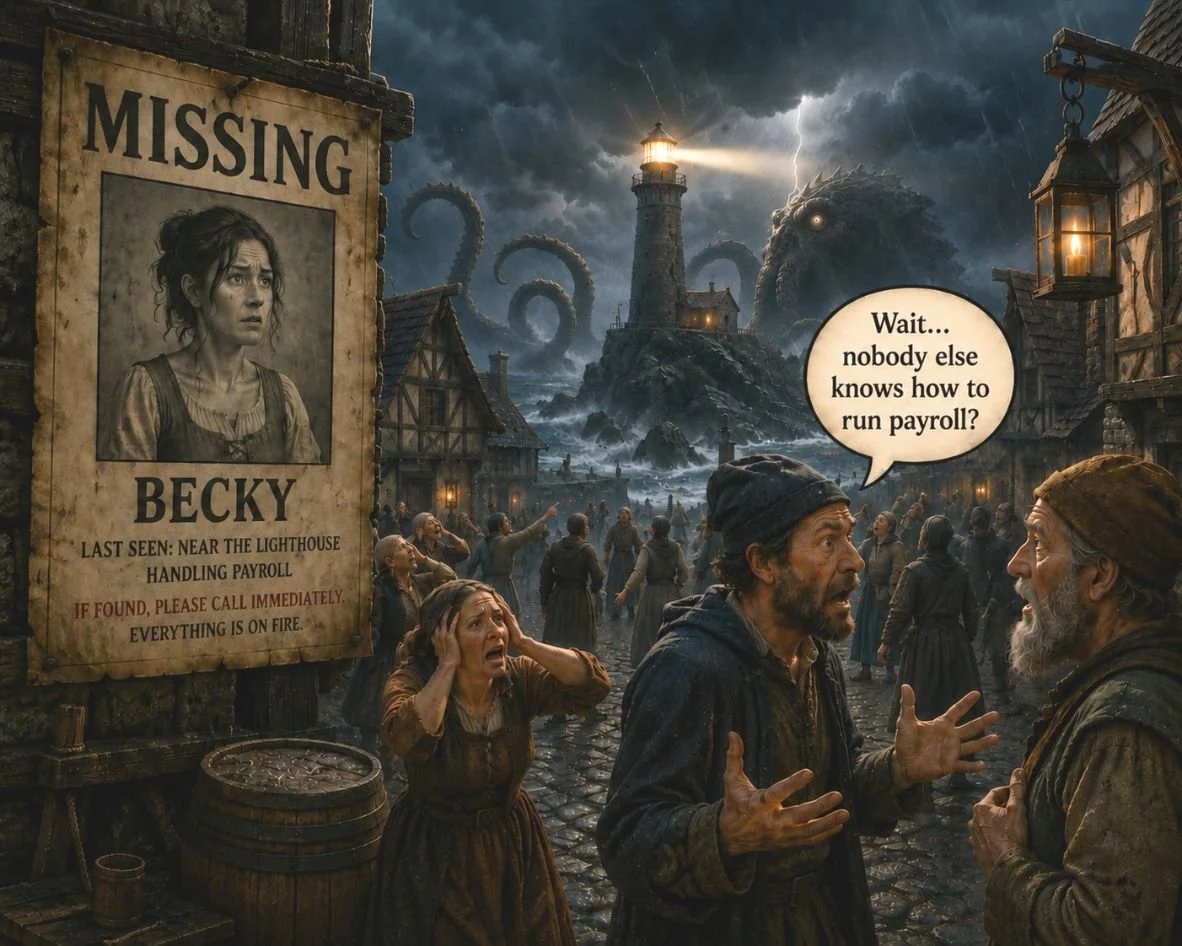
Last weekend I was doing my normal relaxing routine where I listen to a podcast and play mindless mobile games (aligning blocks and watching them disappear is oddly soothing).
This particular podcast was one of those creepypasta “Strange Rules…” stories.
In this story, a lighthouse keeper was training his replacement on all the strange rules for the lighthouse, such as:
Keep the light lit from dusk until dawn at all costs.
Don’t open the strange orange door in the basement.
You may hear cries for help from the bottom of the cliff. Ignore them.
If you see the green sea monster, count to 4 and close your eyes until you hear thunder.
etc.
Being who I am, my brain immediately went to, “Um, why isn’t there a procedure manual that spells all this stuff out?”
Then the next thoughts in my head were, “Wait, why is there only one lighthouse keeper at a time? What happens if he gets eaten by the sea monster?”
This concept is what we in the risk management world call “key person risk.”
Key person risk happens when only one person knows what to do, how to do it, when to do it, and who has access to do it.
In my Warning Signs guide, I wrote about Sally (runs a key report) and Joe (approves expenses). They were the only ones who could do what they did. Once they were out of the office or unavailable, work stopped.
I see this all the time. And when I say all the time, I mean: All. The. Time.
Especially in organizations where resources are tight and having backup staff for backup staff is just not feasible.
The impact can be very detrimental to the organization and the people in it (Francine is probably couch surfing now because Joe was out healing his bum knee and didn’t approve her expenses in time for her to pay her rent).
This is another one of those “invisible to leadership” problems because organizations can survive like this for a surprisingly long time. It usually just feels like, “this is how we do things here.” But it’s not sustainable.
Eventually the person leaves, retires, burns out, refuses to deal with the nonsense anymore, or gets hit by a bus (boat?).
And when that happens, organizations have to scramble to figure out which end is up and how to meet critical deadlines.
Imagine that someone in your organization tells you they’ll be out on an extended leave starting tomorrow. Whose name would immediately make you cancel your plans for the foreseeable future?
But don’t fear, because this too is fixable, even if resources are tight.
When you’re ready, reach out and let’s fix the gaps before Becky gets eaten by a sea monster and you can’t run payroll.