Alfred Was Defeated by a Princess and a Dragon
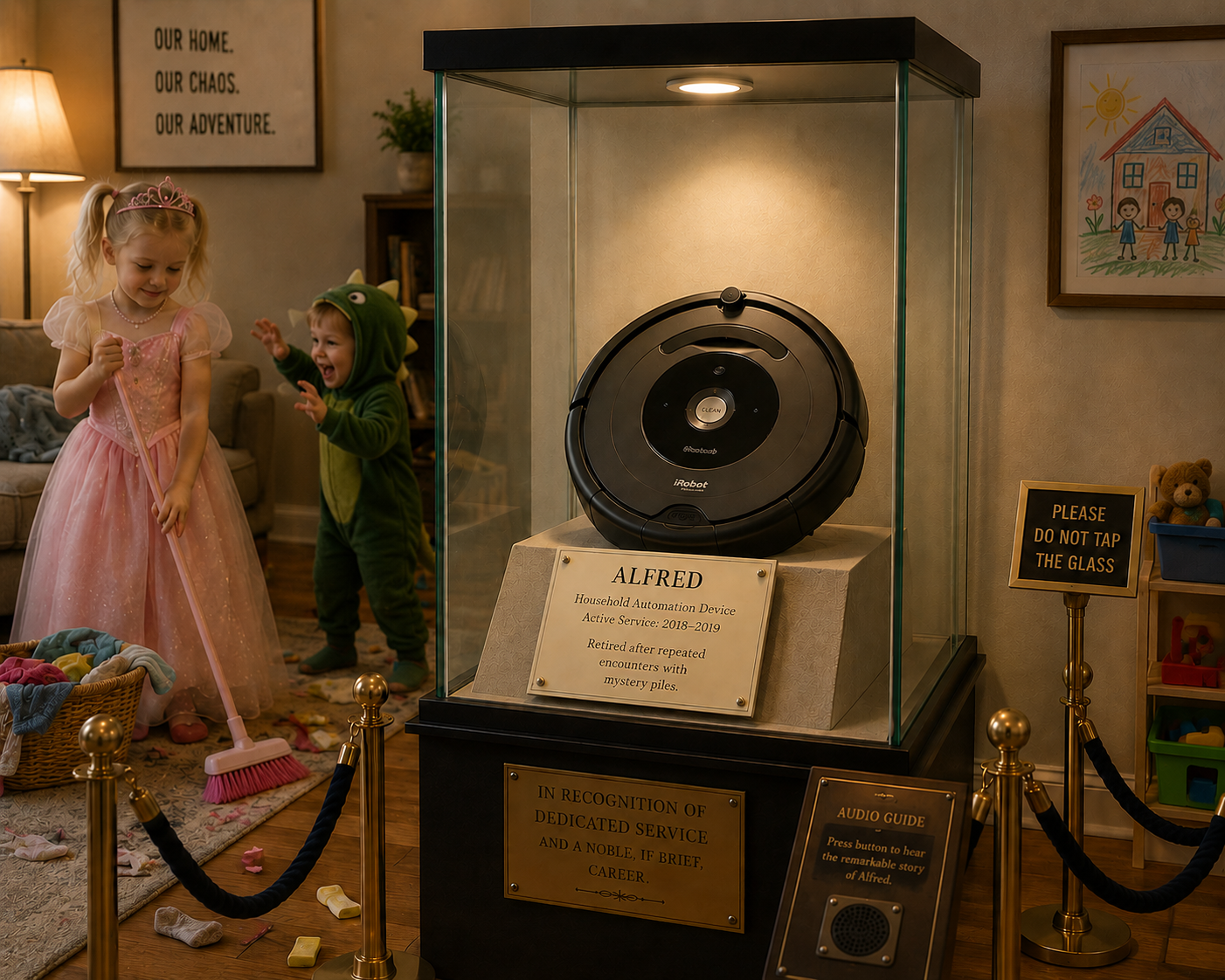
A few years ago, we installed luxury vinyl plank flooring on the first floor of our house.
At the time, I learned that crumbs and dust aren’t just unsightly, they can also scratch the floor.
Wanting to protect our investment and having low trust that my then-small children would keep their crumbs to themselves, we decided to buy a robot vacuum.
We named it Alfred, because why not?
With everything we were juggling at the time (kids, full-time jobs, house, social lives, etc.), it seemed like a dream that we could say, “Alexa! Tell Alfred to clean!” and have crumb-free floors.
Honestly, it felt nice to use Alexa for something other than playing Baby Shark for the 1,000,000th time or making rude noises when the kids asked it to (you know the kind).
But, the floor always seemed to have too many things on it for Alfred to clean properly: toys, errant socks, a random pile of [oh my goodness, what is that!?], etc. You know how it goes.
After a while, we realized that using Alfred was taking up more time than not using it. Every time we wanted it to clean, we had to walk around and move things out of its way. Plus, it kept thinking the room was differently shaped than it was and missing spots.
Within a few months, we stopped using it altogether. These days, Alfred mostly serves as an expensive decoration in the “this is our 2010s-era” corner of our house.
There were several reasons why Alfred didn’t work for us:
We hadn’t assessed how we currently did things. Did we follow our kids around all day picking up mystery piles? Or did we do it periodically just before (or after) the cat ate them
We hadn’t given Alfred the time or unhindered space to properly learn our floorplan.
We hadn’t really understood how Alfred worked or what it needed to be effective.
This brings me to how I’ve seen organizations select and implement new tools and systems. Often, they find a problem (crumbs and dust), pick a solution that seems like it would work (robot vacuum), plug it in, and say “Ready? Go!”
This only works if you’re very very lucky. Most of the time, unless you do serious underlying process discovery and design work, it won’t.
This includes understanding how work currently happens, figuring out how work should happen, selecting a tool that automates what you need it to, implementing it accordingly, and making sure it works the way it should after it goes live.
If we’d done these steps before investing in Alfred, we’d have realized that a solution requiring perpetually unimpeded surfaces was not the right fit for an environment where mystery piles appear on an ad hoc basis without notice.
We ended up investing in a princess dress and a little pink broom. Then we told our daughter to pretend that she was a princess trapped in a tower and that she had to clean before the dragon (her brother) arrived. It worked a few times until she lost interest.
Luckily, software doesn’t lose interest if you program it right.
If this sounds familiar, let’s chat.